
UPGRADING SYSTEMS FOR EFFICIENCY
Improved workflows, surfaced insights, and increased efficiency through system upgrades.
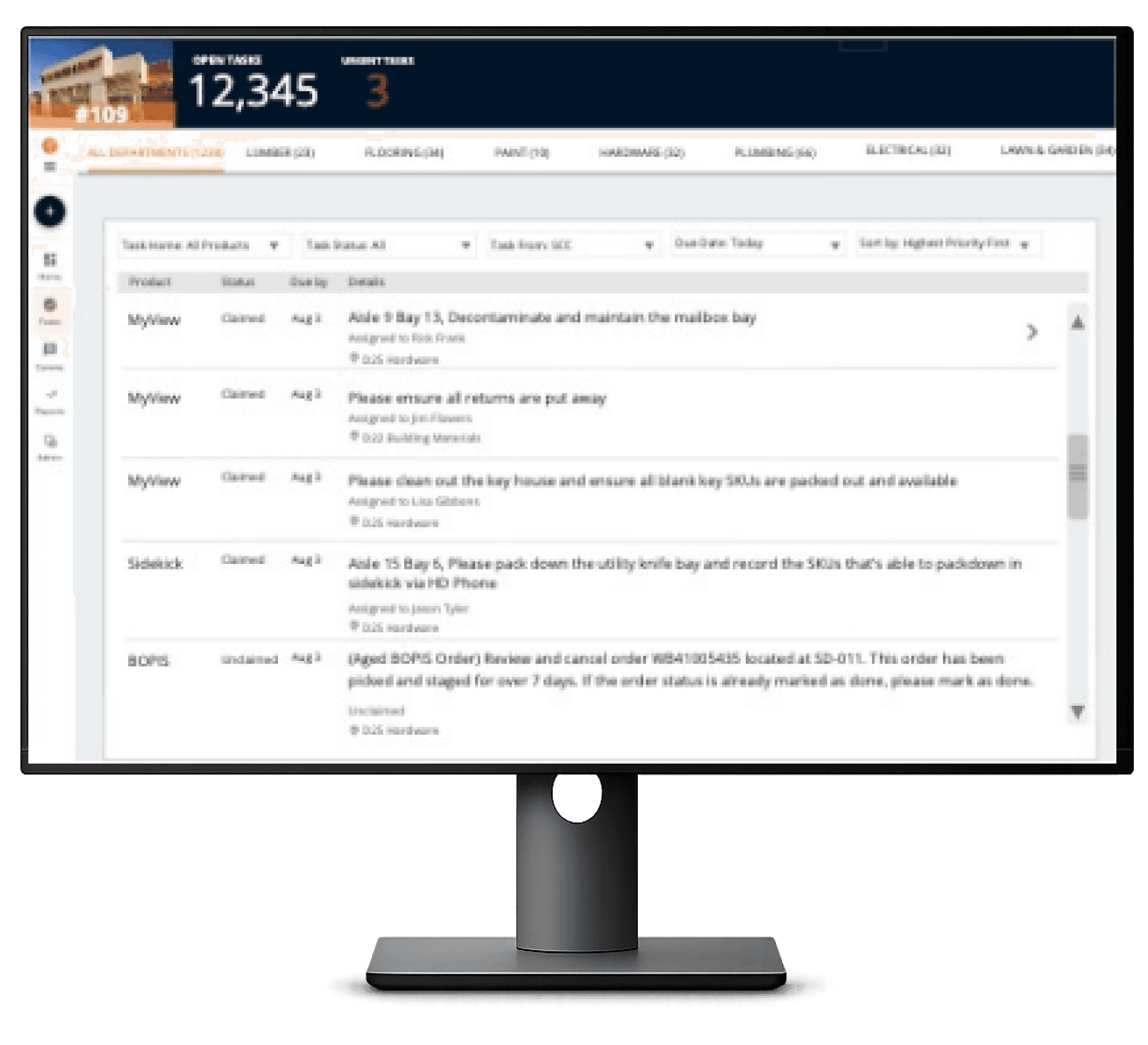
overview
Improved systems across inventory, reporting, and tasking
Leveraged technology upgrades to streamline workflows
Designed dashboards for operational insights
Used AI and prototyping to accelerate ideation and analysis
the challenge
Legacy systems and fragmented data created inefficiencies across key workflows.
Teams lacked actionable insights to identify breakdowns and make informed decisions.
Teams had to improve systems within tight timelines and limited budgets.
Opportunity: use technology upgrades to improve efficiency, visibility, and decision-making
Improved inventory efficiency and ensured critical data was successfully migrated and validated.
context
A large-scale cloud migration moved store-level inventory data from legacy systems to Google Cloud.
Critical data and workflows needed to be preserved while improving operational efficiency.
solution
Mapped inventory workflows and redesigned key touchpoints, introducing digital tools and AI-assisted concepts to reduce manual effort and improve accuracy.
impact
Improved inventory efficiency and ensured critical data was successfully migrated and validated.
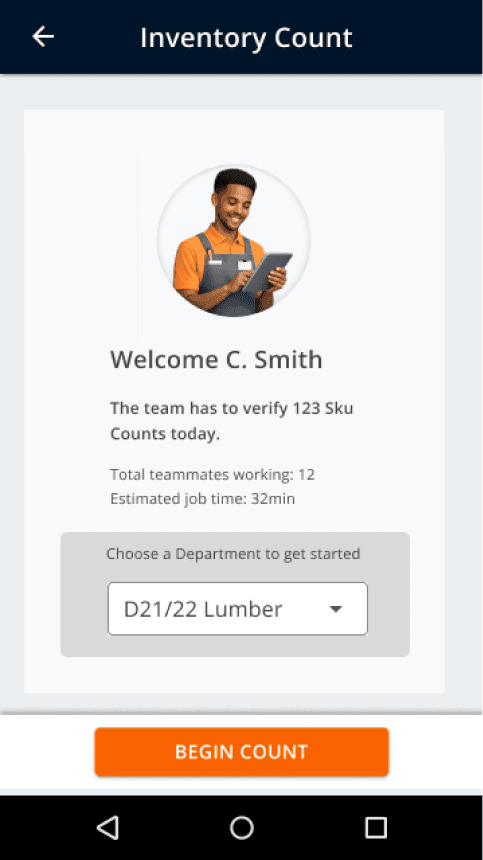
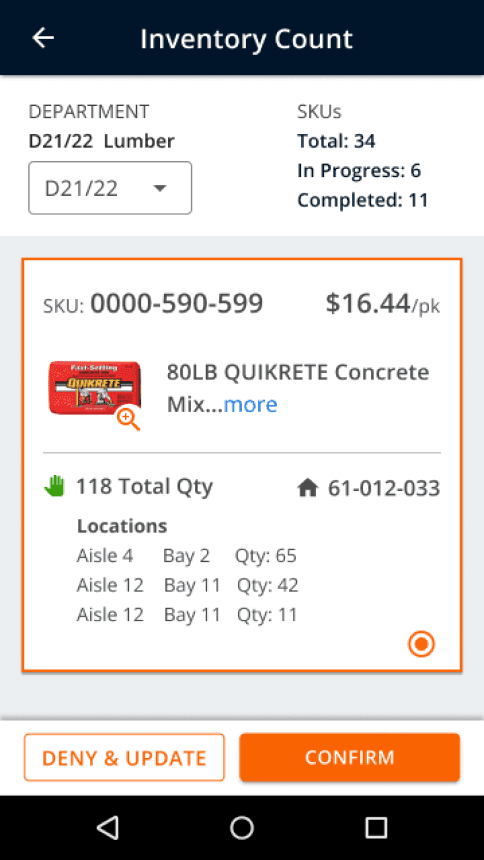
Inventory counting app
Rapidly prototyped mobile tool to replace manual inventory workflows and improve counting efficiency.
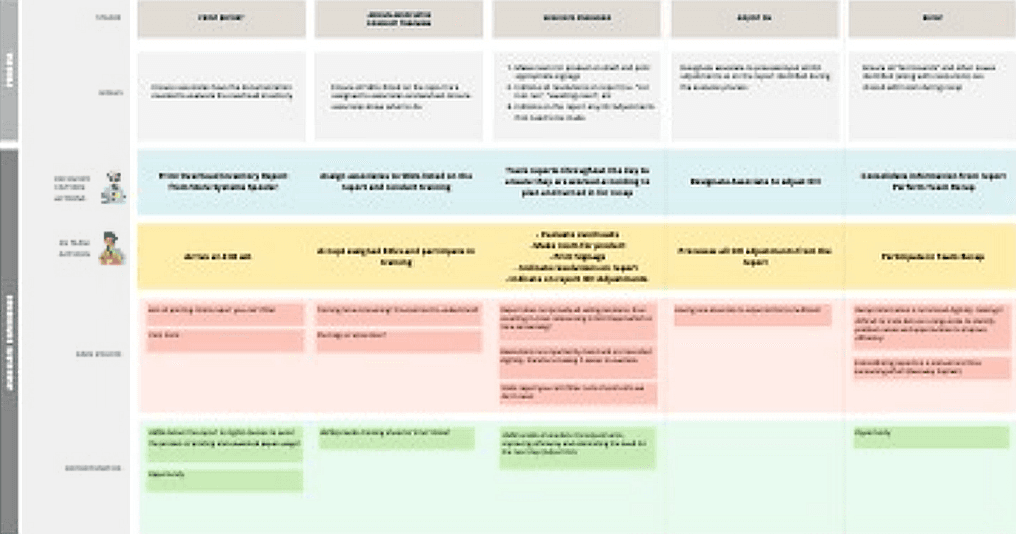
annual inventory mapping
Mapped end-to-end inventory workflows through contextual interviews to identify breakdowns and improvement opportunities.
data evaluation framework
Defined the approach for evaluating and prioritizing legacy reports during migration.
Improved visibility into tasking data to enable better decisions and efficiency.
context
Tasking data was fragmented, limiting visibility into operational performance.
solution
Clarified tasking value and supported efforts to standardize data and increase adoption.
impact
Improved visibility, facilitated tasking standardization, and enabled more efficient, data-driven decisions.
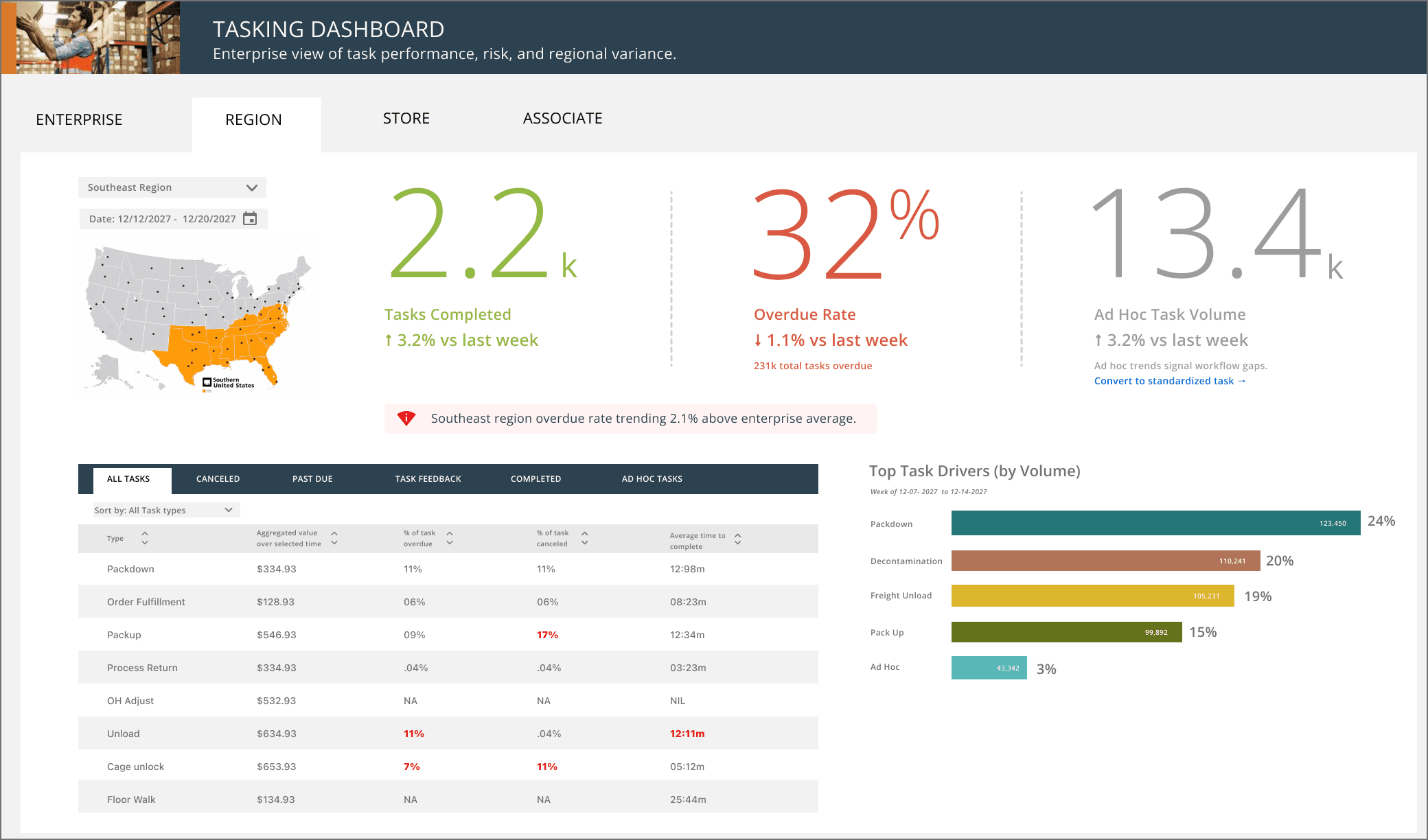
tasking dasboard
Surfaced performance, risk, and trends from enterprise to store level.
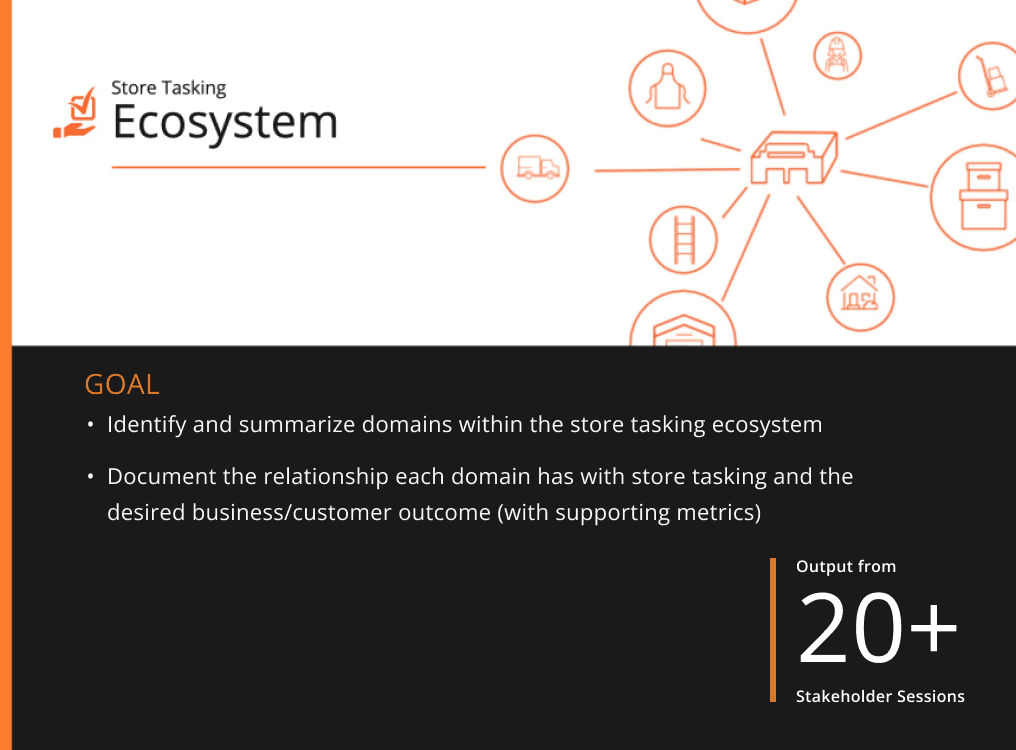
Tasking System Alignment
Improved visibility, facilitated standardization of tasking structure, and enabled more efficient, data-driven decisions.
adoption and alignment
Clarified value and drove adoption of a unified tasking system.
Complex systems required new ways to identify opportunities and solve difficult technology challenges.
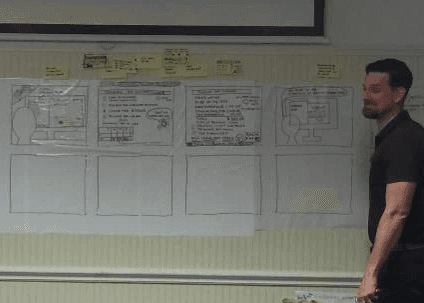
context
Complex systems required faster ways to explore and validate new ideas.
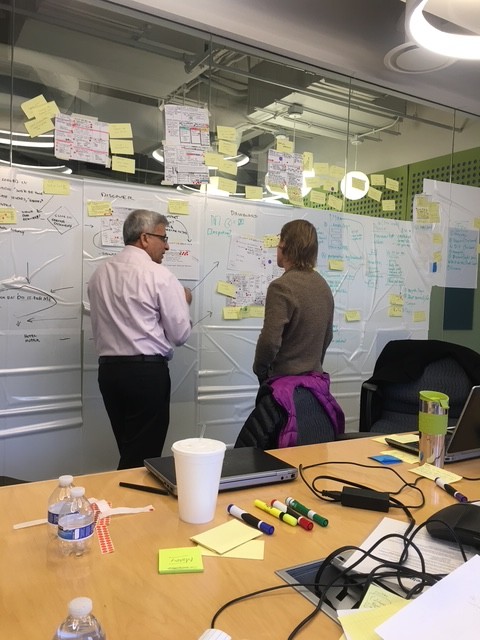
solution
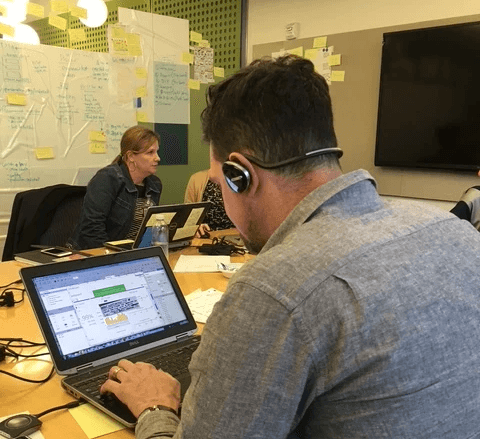
Led design sprints, workshops, and prototyping to identify opportunities and solve complex technology challenges.
impact
Informed product direction and validated solutions to accelerate technology improvements.

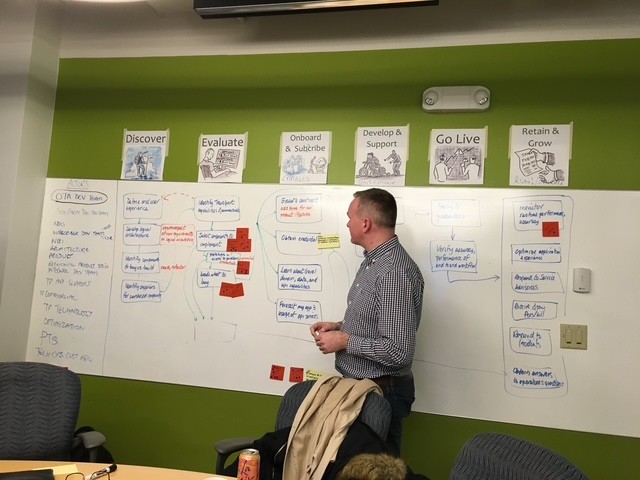
workshop facilitation
Aligned cross-functional teams to identify opportunities and define technology solutions.
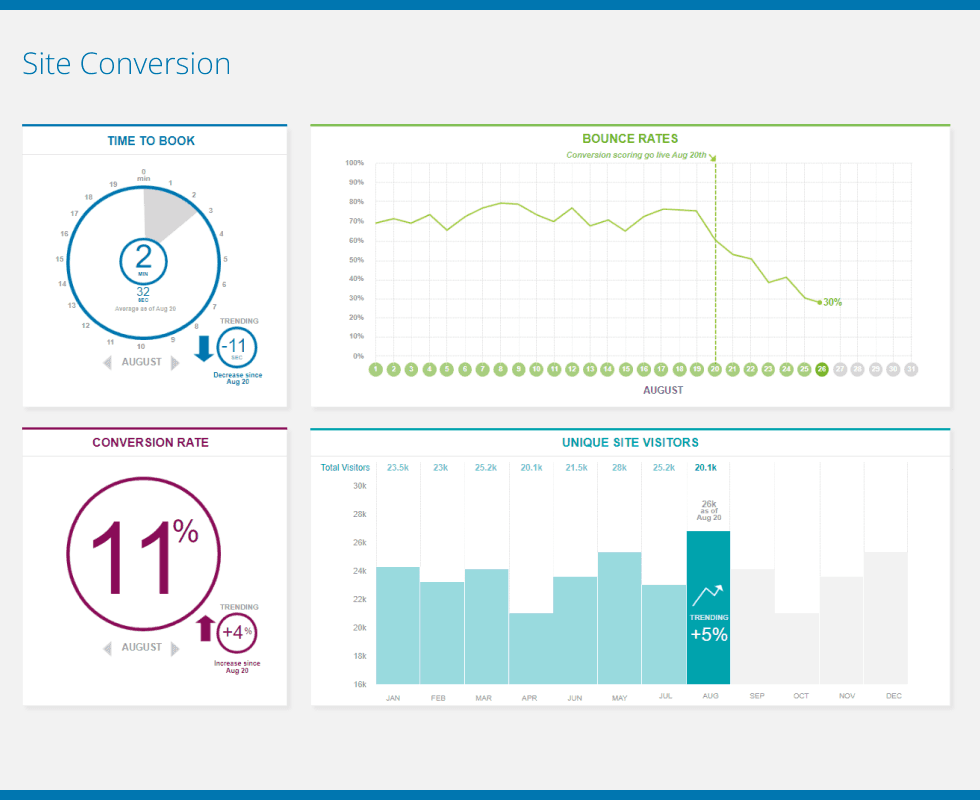
conversion scoring concept
Identified booking friction and enabled data-driven decisions to improve conversion.
Additional concepts explored:
Agency efficiency automation
Flight availability tracking
Business travel insights
key outputs
• Identified new product opportunities across travel workflows
• Defined solutions to improve booking efficiency and reduce friction
• Created prototypes to validate ideas before engineering investment


